- Career Intelligence Weekly
- Posts
- 💊 The $1 Trillion Health Crisis Nobody Solved — Until Now
💊 The $1 Trillion Health Crisis Nobody Solved — Until Now
How female-founded biotech startups are building the most underleveraged career opportunity in the market.

Jim Stroud
March 26, 2026
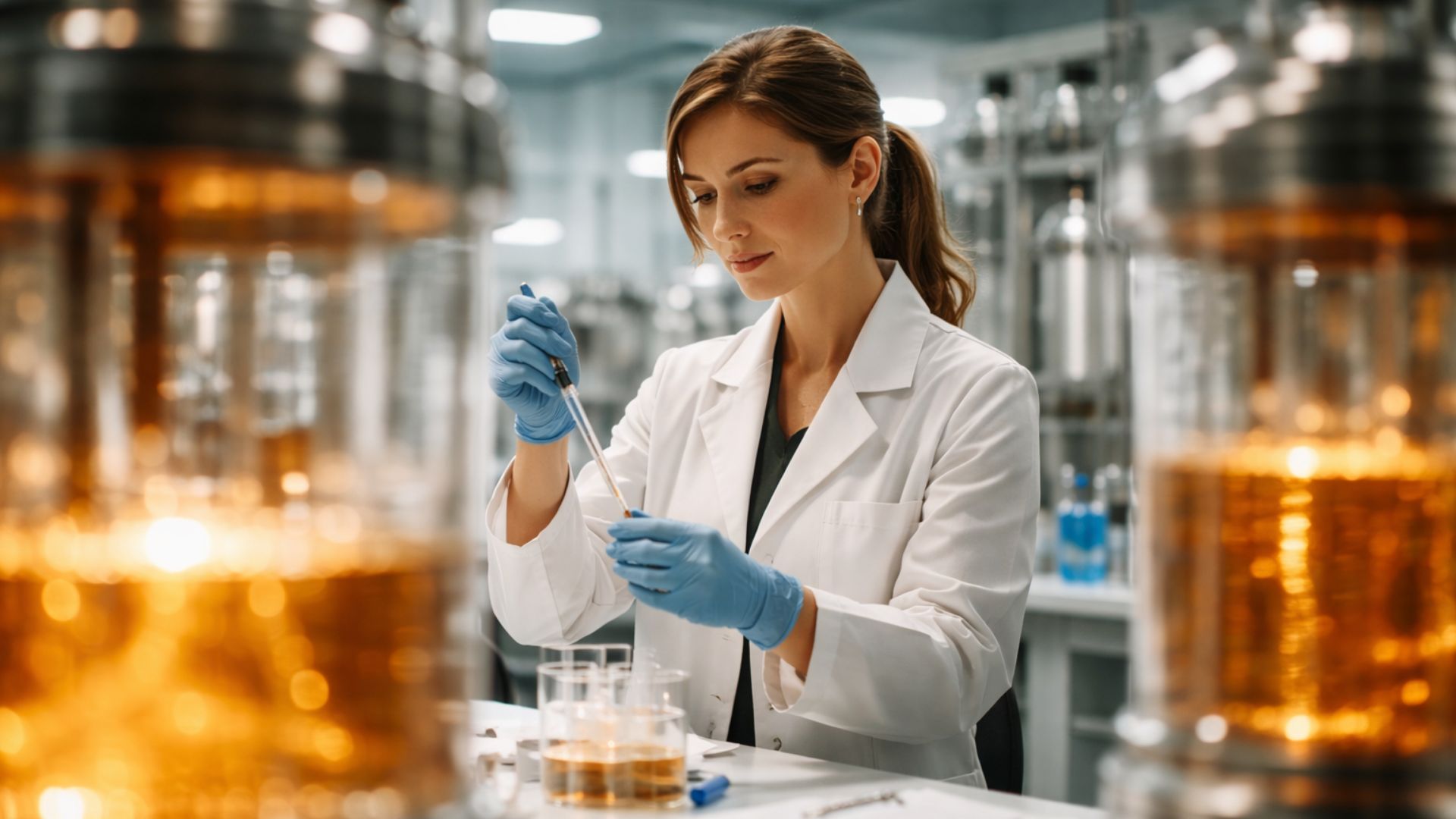

A $1 trillion market has been sitting wide open for decades because the industry decided women's health wasn't worth the investment.
A wave of female-founded biotech startups just decided they were done waiting, and here is what that means for where the jobs are going. 👇
The $1 Trillion Health Crisis Nobody Solved — Until Now
TL;DR
Women's health is a $1 trillion market being built from scratch
Precision fermentation is the platform technology powering the revolution
Only 7% of healthcare research focuses exclusively on women
Founder-market fit is driving serious investor attention
Regulatory, scientific, and commercialization talent gaps are wide open
The ground floor hiring window is right now
What Everyone Is Talking About
Women spend 25% more time in poor health than men. Only 7% of healthcare research focuses on conditions that exclusively affect them. Nearly a third of women worldwide suffer from anaemia. And the mainstream healthcare and nutrition industries have known about these gaps for decades.
They just didn't do much about them.
That is changing fast. A wave of female-founded startups is now attacking this problem with serious technology and serious capital behind them. They are using precision fermentation, cell culture technology, and women-specific clinical research to build products that the industry never bothered to create. McKinsey has sized the total opportunity at $1 trillion.
These are not wellness boutiques with pink packaging and motivational slogans. These are deep technology companies solving biological problems that the establishment ignored for generations. And they are funded, scaling, and hiring.
Here are six of the companies leading the charge:
Helaina ($83M raised) is producing a recombinant breast milk protein via precision fermentation, targeting the gut-immune-iron axis across every stage of a woman's life from menstruation through menopause.
Ironic Biotech is using precision fermentation to develop plant-derived heme protein that absorbs iron 65 times better than lactoferrin, founded by a professor whose own anaemia diagnosis sparked the research.
TurtleTree ($40M raised) became the first company in the world to receive regulatory clearance for recombinant bovine lactoferrin, now offering consumer products that combine lactoferrin with prebiotics to support iron regulation and gut health.
Earthful ($4M raised) is an Indian plant-based nutrition brand targeting women aged 35 and older, with the first herbal multivitamin for menopausal women in India.
Løuco makes science-backed protein blends formulated exclusively for female physiology, covering everything from pregnancy and breastfeeding to perimenopause and active recovery.
Nūmi is producing cell-cultured breast milk as a superior alternative to infant formula, addressing the reality that 5 to 10% of women are physiologically unable to breastfeed and many more face significant difficulties.
What the Labor Market Is Actually Saying
Most people will read this as a health and wellness story. Career strategists will read it as one of the most significant hiring signals of the decade.
There are three layers buried inside this space that your career strategy needs to account for right now.
📌 Signal 1: A $1 Trillion Market Is Being Built From Scratch
McKinsey's $1 trillion figure for women's health is not a projection of gradual, incremental growth. It is a measurement of unmet need that is finally being addressed by technology and capital simultaneously. Markets of that size, at this early stage of development, create hiring surges that last decades. The professionals who establish expertise in this space now will be building careers on the ground floor of something that has nowhere to go but up.
📌 Signal 2: Precision Fermentation Is the Enabling Technology of the Next Nutrition Revolution
Three of the six companies profiled here are built on precision fermentation platforms. This is the same technology being deployed in alternative proteins, sustainable materials, and pharmaceutical manufacturing. It is not a niche process. It is a cross-industry platform technology at an inflection point. Professionals who develop fluency in precision fermentation right now are building a transferable, future-proof skillset at exactly the moment when demand for it is accelerating across multiple sectors simultaneously.
📌 Signal 3: Founder-Market Fit Is Driving a New Category of Investor Attention
Every company in this space was founded by someone with direct personal experience of the problem they are solving. An anaemia diagnosis. Struggles with iron supplements. Breastfeeding difficulties. Perimenopause. That pattern is not coincidental. It is a signal that this space has been so underserved for so long that the people closest to the problem are the ones building the solutions. Investors are noticing. Funding is following. Talent gaps are opening. The hiring curve has not peaked. It has barely started.
Before we continue —
Signals like this one do not just shape headlines. They reshape entire industries, supply chains, and hiring priorities simultaneously.
The professionals who act on intelligence like this before it becomes obvious are the ones who move earlier, choose better, and stay ahead of the market. That is exactly what the Career Intelligence System is built to help you do.
It uses real hiring signals, salary trends, and Invisible Job Market data to help you spot opportunities before they are posted, evaluate which moves actually increase your earning potential, and understand how AI and industry shifts affect your path before those shifts become obvious to everyone else.
Tools inside the system include:
Invisible Jobs – Surface early hiring activity before roles go public
Career Navigator – Track how technology and labor market shifts are affecting your specific role
Career ROI – Evaluate the financial impact of career decisions before you commit
The Inspiration Engine – Translate the career paths of people you admire into your own playbook
100 Job Search Hacks – Generate inbound strategies that make opportunities come to you
Plans start at $29.99 per month.
This is how the Invisible Job Market works. And this is how you act on it.
Start moving earlier. Start moving now. 👇
Where the Jobs Are Moving
🟢 GROWING — Get Positioned Now
→ Precision Fermentation Scientists and Bioprocess Engineers: The technical backbone of this entire category. Professionals with bioprocess engineering, synthetic biology, or fermentation science backgrounds are in extraordinary demand, and the women's health application is one of the fastest-growing deployment areas in the field right now.
→ Women's Health Researchers and Clinical Trial Specialists: Only 7% of healthcare research focuses on conditions exclusively affecting women. That gap is now a mandate with funding behind it. Companies in this space need clinical researchers, trial designers, and outcomes analysts who specifically understand women's physiology across life stages, including menstruation, pregnancy, perimenopause, and menopause.
→ Regulatory Affairs Specialists in Novel Food Ingredients: TurtleTree was the first company in the world to receive regulatory clearance for recombinant bovine lactoferrin in both Singapore and the U.S. That clearance required deep expertise in a category that barely existed five years ago. Every company in this space faces the same regulatory gauntlet. Professionals who understand novel food ingredient approvals across multiple jurisdictions are critically scarce and exceptionally well compensated.
→ Nutrition Scientists with Female Physiology Specialization: The companies in this space are not making generic supplements with a pink label. They are formulating products around the gut-immune-iron axis, cycle syncing, perimenopause, and postpartum recovery. Nutrition scientists who can work at that level of specificity and communicate it credibly to both consumers and investors are building a rare and defensible expertise.
→ Femtech and Women's Health Investors and Analysts: The $1 trillion opportunity is still in early innings from a capital deployment perspective. Venture analysts, impact investors, and corporate development professionals who develop deep category knowledge in women's health biotech now will be the ones making and advising on the most consequential investment decisions of the next decade.
→ Science Communication and Health Marketing Professionals: Every company in this space is solving a complex biological problem and selling it to a consumer who may have limited scientific background. The professionals who can translate precision fermentation, bioavailability, and hormonal health into compelling, accurate, accessible narratives are extraordinarily valuable in this category and extraordinarily rare.
→ Supply Chain and Commercialization Specialists in Alternative Ingredients: Getting a precision-fermented ingredient from lab to shelf involves regulatory clearance, manufacturing scale-up, ingredient sourcing, retail partnerships, and logistics. Each step requires specialized expertise. As these companies move from startup to scale, they will need professionals who have navigated this specific path before.
🟡 EVOLVING — Reframe How You Position Yourself
→ Pharmaceutical and Traditional Supplement Industry Professionals: The companies in this space are explicitly building alternatives to poorly absorbed iron supplements, hormone-agnostic nutrition products, and dairy-based infant formula. If you have worked in traditional pharma or supplements and can bring that operational and regulatory knowledge into a biotech-native women's health company, you are a bridge hire. Bridge hires command premium compensation.
→ OB-GYN and Women's Health Clinicians: The clinical credibility gap in this category is real and significant. Physicians and clinicians who can serve as medical advisors, clinical consultants, or chief medical officers for women's health startups are in demand. Your clinical expertise combined with their technology platform is a combination the market is actively seeking and struggling to find.
🔴 EXPOSED — Watch Your Back
→ Traditional supplement companies that have been selling women generic, male-formulated products with minor adjustments are facing a direct competitive threat from companies with women-specific clinical data and technology-enabled ingredient differentiation. If your career is tied to a legacy supplement brand, assess how quickly your employer is adapting. The answer to that question matters more than you might think.
→ Any healthcare or nutrition professional who has been dismissing the women's health biotech space as a wellness trend rather than a deep technology category is misreading the signal. The funding, the science, and the market size all say otherwise.
What to Do This Week
→ Move 1 — If you are in biotech or life sciences, add women's health to your specialty narrative immediately. The category is undercapitalized in talent relative to its market opportunity. Professionals who position themselves at the intersection of their existing technical skills and women's health applications are entering a talent market with very little competition. That window will not stay open indefinitely.
→ Move 2 — If you are a woman who has personally navigated any of the health challenges described here, your lived experience is professional currency in this space. Founder-market fit is driving investment decisions across the entire category. The same principle applies to hiring. Companies building products for women want teams who understand the problem from the inside. That is not a soft credential. It is a strategic asset.
→ Move 3 — If you are in food science or nutrition, get educated on precision fermentation now. You do not need a PhD in synthetic biology. You need enough fluency to have an intelligent conversation about what it is, what it enables, and where it is heading. That fluency alone will differentiate you from the majority of nutrition professionals in the market today.
→ Move 4 — If you are in healthcare marketing or science communication, build a portfolio in women's health. The companies in this space are scaling and will need to communicate complex science to mass consumer audiences across multiple channels. Professionals with demonstrated ability to do that accurately, compellingly, and with cultural competence around women's health topics are in short supply.
→ Move 5 — Watch the funding rounds. Helaina has raised $83 million. TurtleTree approximately $40 million. These are not seed-stage experiments. These are companies approaching the growth stage, which is exactly when hiring accelerates from founder-led to team-led. The next 12 to 18 months will see significant job creation across all of these organizations. Position yourself before the postings appear.
The Intel Drop
Women spend 25% more time in poor health than men. Only 7% of healthcare research focuses exclusively on them. And a $1 trillion market is sitting there, largely unaddressed, waiting for the professionals with the courage and the credentials to build it.
The women's health biotech revolution is not a wellness trend. It is a scientific correction to decades of systemic underinvestment, backed by serious capital, serious technology, and serious founders who are solving serious problems.
The career opportunity here is not just significant. It is generational.
The companies building this category need scientists, regulators, marketers, clinicians, investors, and communicators. They need people who understand the biology and people who understand the business. They need people who have lived the problem and people who can scale the solution.
The only question is whether you are paying attention.
Now you know. Go move. 🎯
Reply